How to make alcohol ink art
Alcohol ink art is made by letting fast-drying, dye-based inks flow across a surface that doesn't absorb them. You guide the ink with alcohol, air and tilting rather than a brush, and it dries into glowing colour with crisp, dark edges.
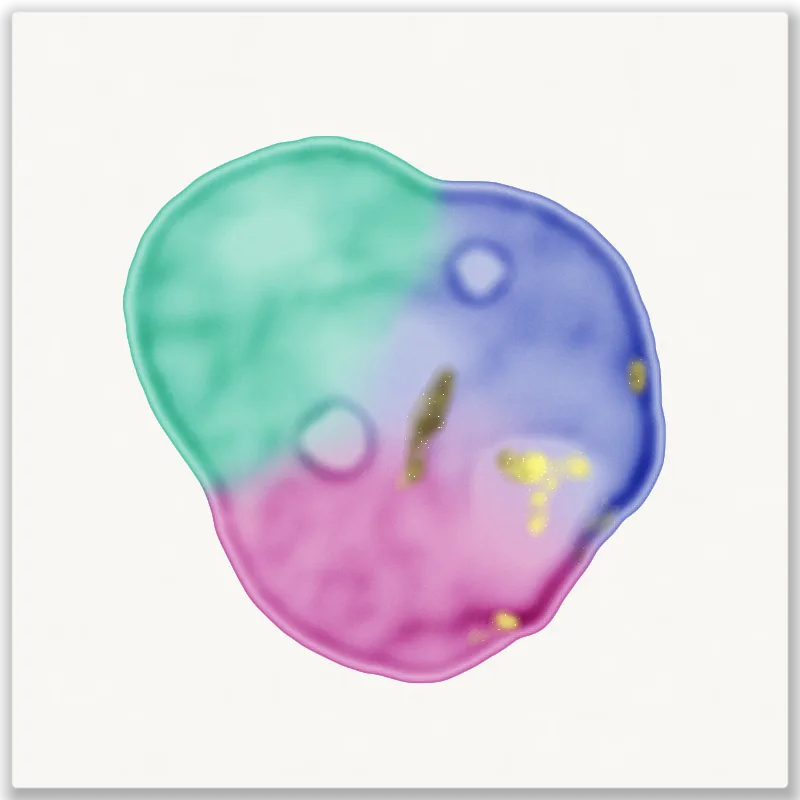
What you need
- Alcohol inks: highly pigmented dyes in an alcohol base. Two or three colours that sit well together are plenty to start.
- A non-porous surface: Yupo (a synthetic paper), glazed ceramic tile, glass, or a coaster. Ordinary paper soaks the ink in, so it can't flow.
- Isopropyl alcohol (91–99%) in a dropper or spray bottle, to move, lighten and bloom the ink.
- Something to move air: a straw, a blower, or a hair dryer on low.
- Optional: metallic mixatives (gold, silver, copper, pearl), gloves, and good ventilation, as the fumes are strong.
Step by step
- Start with alcohol. Wet the area with a little alcohol first. Ink dropped onto a wet surface spreads further and softer.
- Drop in colour. Add a few drops of your first ink and let it spread. Add a second colour beside it, close enough that the edges meet while both are wet.
- Move the ink. Blow across it, tilt the surface, or add more alcohol to push the colour around. Work while it's wet: once it dries, it stays where it is.
- Make blooms. Drop alcohol into the middle of a wet or dry patch of ink. It pushes the colour outwards into a soft, pale circle with a darker ring (a "bloom" or "cell").
- Add metallics. A drop of gold or silver near the edges just before the ink dries gathers in the veins and rims.
- Let it dry and seal it. The ink dries in minutes. On real pieces, seal with a UV-resistant spray and then resin if you want gloss and protection.
Why the edges go dark
As a puddle of alcohol ink dries, the liquid evaporates fastest at its thin edges. Liquid flows outwards to replace it and carries pigment with it, so colour piles up in a crisp, darker line around each shape: the "coffee ring" effect. That's why alcohol ink art has its characteristic rims, veins and cells, and why the middle of a pour is often lighter, with just a soft stain of colour.
Common mistakes
- Too much ink. A few drops go a long way; a flood dries muddy. Build up layers instead.
- Overworking it. Let some areas dry untouched so the edges can form.
- Mixing every colour. Opposite colours that blend in the wet (like orange and blue, or red and green) turn muddy brown. Leave white space between some of them.
- Porous paper. Watercolour or printer paper absorbs the ink, so it stops flowing. Use Yupo, tile or glass.
Questions
How long does alcohol ink take to dry?
Usually a few minutes, faster on warm days and on thin layers. A blower or hair dryer speeds it up.
Can you paint over dried alcohol ink?
Yes, but fresh ink or alcohol re-wets the layer below and moves it again. Seal a layer first if you want to keep it exactly as it is.